Blog 5.1 - Adding Heat
December 2023
It can get somewhat parky in a vehicle on a chilly day if it's stood standing with no added warm air, and a motorhome is little different from any other vehicle in that respect.
OK, it has some insulation in the coachbuilt areas, including double-glazed (well, double-plasticked) windows, but none of that extends to the cab area, so that side of proceedings just ends up being a big heat-leak.
Yes, our van came, as most do, with a Truma propane/electric boiler feeding heat into a blower which in turn feeds into various outlets around the interior, but this, while fairly effective, uses a lot of gas. We specified a Gaslow refillable LPG system, with two 11kg cylinders when we first purchased it, and that's fine, but places to top up are becoming more and more sparsely located in the UK (they're possibly easier to locate on the mainland, admittedly, but they always seem to be a real faff). The upshot is that we prefer to preserve gas stocks to run the three-way fridge, and heat water for showers when we don't have access to such luxuries elsewhere - which is rare given that we limit campsite visits to a handful of nights in every trip of up to three months.
Of course, we can run the Truma heater boiler on electric if we're on a campsite, and to a limited degree on Camping-Car Park aires in France (bearing in mind that the latter are only ever inclusive of a six amp hookup so you need to juggle other electrical consumption requirements to suit, and avoid tripping the supply).
So, all this adds up to...
A Chinese Diesel Heater (CDH).
We've (well, I have) ummed and ahhed about having one for almost as long as we've had the van, and even bought one last winter. Then I chickened out of installing it as I just didn't like the thought of accidental spillages when topping up the fuel tank contaminating our nice new van. The stink is with you forever. Not nice. Indeed, the only way I was going to change my stance was to have the CDH plumbed direct into the van's own diesel tank fuel supply. So that's what we did - or rather that's what Josh* did for us.
In the meantime (last winter), I'd installed the purchased CDH outside the house, in the lean-to garage front extension, and piped the resultant hot air through the house wall, through the downstairs lavvy, and out into the kitchen.

Control Room!

Kitchen diesel heater with newly installed 230v/12v power supply. Wiring still needing tidying. Sorry, it was a rush job when the original 12v battery went south.

Fuel Tank. Note diesel spillages. I really don't want that in the van
On the face of it, this was never going to work well. I mean, it's not just expected to warm the kitchen, but because there are no doors (apart from on the lav of course!) it has to warm the kitchen, the dining area, the conservatory (no internal doors) and the hall, stairs, and landing. Ridiculous!
However, it does.
It's not instant heat of course, but as a means of adding to the gas central heating's output on the coldest days it means that a comfortable temperature can be attained much more quickly, meaning the gas boiler shuts down sooner and more often.

The kitchen blower on the minimum setting

And on the highest (it continued to rise a few points after this, but I was burning my fingers by now and overheating the phone!).
The heater is much noisier at this setting, but the volume of air pumped out is drastically increased.
You can't expect miracles from a maximum of 5kw in such a large space, but it certainly helps, and only sips diesel into the bargain. I just need to see if I can get Trinity Marina to sell me red diesel and it'll be even cheaper to run.
Getting back to the van though, and apologies for the diversion - which is relevant in its way - even though I'd installed the home CDH I really didn't fancy a somewhat more complex install in the moho, which is where the aforementioned Josh* came in.
Josh runs a little outfit called Craft 'A' Camper, which does campervan conversions along with various other installations, including diesel heaters.
I WhatsApped him with my requirements and very quickly received a reply, and we'd quickly thrashed out all the details including when he could come and do the install on our driveway. He's pretty busy, and had booked up our area for a while already so it was approaching a couple of months on before he could come, and December, and relatively late in the afternoon - but none of that seemed to faze him.
Two hours later, good as his word, we had a CDH fully installed and running, even though it was quite dark by then.
Impressive.

Control panel and isolation switch mounted on seat-side.
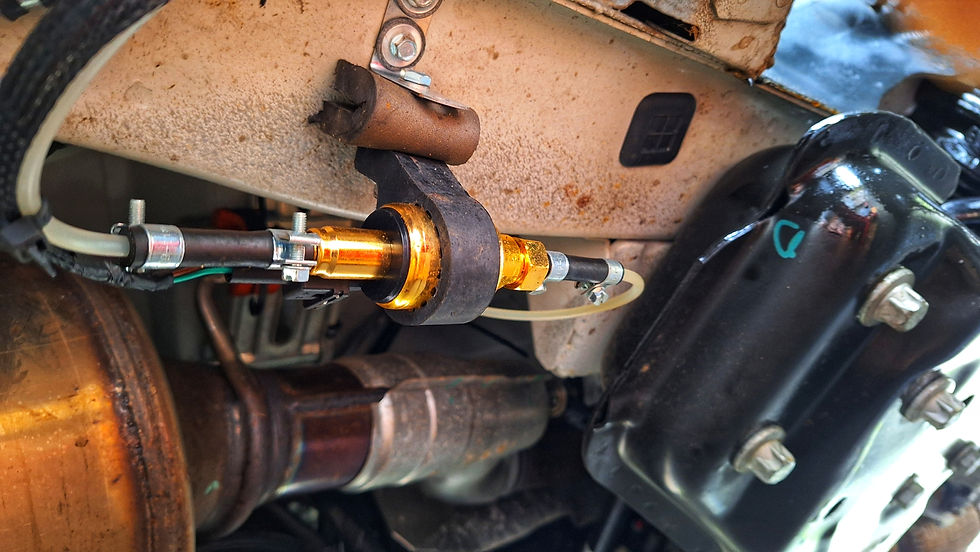
Pump mounted under cab
The heater unit itself is mounted on the cab floor under the driver's seat, and fires backwards into the habitation area, drawing heating air from the front of the cab, and combustion air from outside under the cab floor.
One of the issues with your average CDH is the lack of any coherent instruction manual. They're hopeless, so you're reduced to trying to track down YouTube vids to help with set-up or any fault-finding codes etc. The nice thing, then, is that Josh has produced a really good little manual, supplied as a PDF, that seems to cover everything. Excellent.
I must say that we're quite looking forward to trying it out 'in anger'. Even though we rarely use the van in the depths of winter, the 'shoulder' months, when we do tend to travel can get rather cold at night - and waking up to three inches of snow on the Austrian border earlier this year certainly (re)sowed a seed!
Hopefully it'll be reliable. CDHs always polarize opinion, with the Eberspächer, Webasto etc. fan club decrying them as Chinese crap (even if many of their own vastly more expensive units come complete with a Made in China label, funnily enough...

Eberspächer: made in China...
*Josh can be contacted at www.craftacamper.com
and will travel to most areas for installations.


Comments